
ABOUT AMELIA PEABODY
Distinguished philanthropist, artist, conservationist, and civic leader
Miss Amelia Peabody was born in Marblehead, Massachusetts, on July 3, 1890. She was raised in a family deeply connected to Boston’s cultural, civic, and economic life. Her grandfather and great-uncle were founders of Kidder, Peabody & Co., and her mother was descended from Captain Robert Gray, the first American captain to circumnavigate the globe and trade with China.
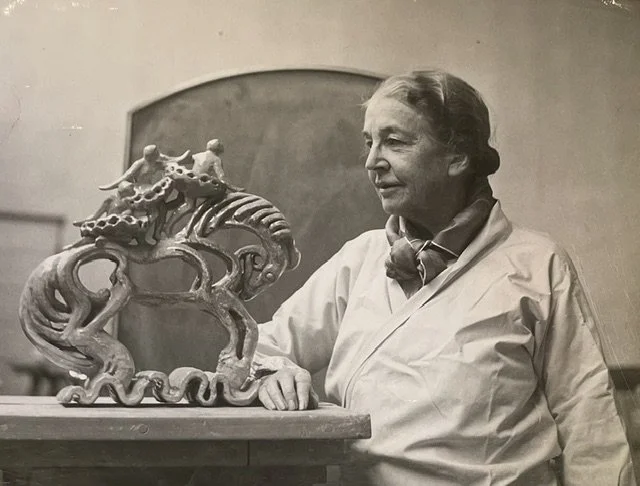
Miss Peabody with her sculpture
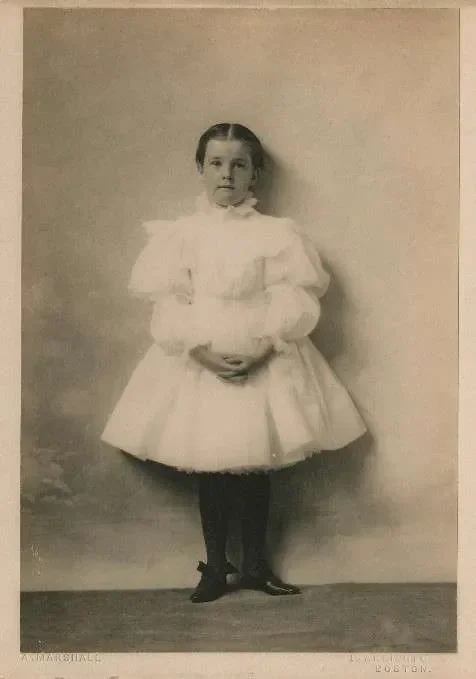
Amelia Peabody, age 6
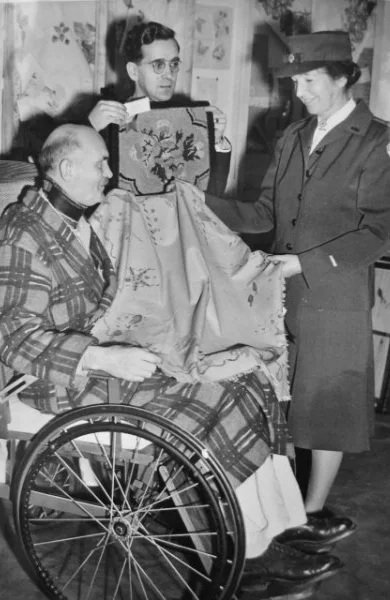
Amelia Peabody, Red Cross Uniform
In 1895, the family moved to a Back Bay townhouse where the Peabody family’s position and legacy helped shape Amelia’s early exposure to public service, philanthropy, and institutional leadership. Miss Peabody never married and devoted her life to civic, artistic, athletic, and intellectual pursuits.
Art was a defining pursuit throughout Miss Peabody’s life. She studied intermittently from 1909 to 1913 at the School of the Museum of Fine Arts, Boston, and returned five years later to study sculpture under Charles Grafly. Beginning in 1918, Amelia Peabody used her artistic training to support returning veterans as they recovered from the effects of war. Her accomplishments as a sculptor brought her recognition in major national exhibitions, including the 1939 New York World’s Fair, where her sculpture Telegram was included in the American Art Today pavilion. Her work remains represented in Massachusetts collections and institutions, including Northeastern University, Tufts Veterinary Medical School, the Dover Town Library, the Museum of Fine Arts, the Peabody Essex Museum, the Marblehead Historical Society, the Boston Athenaeum, and the Dover Historical Society.
Miss Peabody’s charitable interests were notably wide-ranging and included animal husbandry, the arts, conservation, medicine, scientific discovery, education, veterans’ affairs, and human services. In a 1912 diary entry, she wrote, “If I ever do take up a charity, I intend to do it, and not half do it.” That principle became a defining expression of her approach to philanthropy.
At Mill Farm in Dover, Massachusetts, she became one of the town’s largest landowners and raised and showed thoroughbred horses and bred Hereford cattle and Yorkshire pigs. Long before access to green space was widely recognized as essential to well-being, Miss Peabody opened her land to others and advanced a practical belief in nature’s restorative value. Her commitment to animals and the environment also helped support the establishment of the Tufts Veterinary School, New England’s only land-grant veterinary college.
Miss Peabody served on the boards of several major medical organizations, including institutions that became Massachusetts General Hospital, Boston Children’s Hospital, New England Deaconess Hospital, and Joslin Diabetes Center, and she was closely connected to the development of art therapy in Massachusetts. Beginning in 1944, she was appointed Head of the Arts and Skills Division of the American Red Cross in Boston, a program of art therapy that became a model for Veterans Administration hospitals nationwide. Massachusetts General Hospital became the first civilian hospital to provide art therapy to patients in 1948. Also in 1948, Miss Peabody provided visionary philanthropic support for the world’s first solar-heated home. The project was unique not just in its innovation, but because it was led by an all-female engineer and architect team challenging the status quo as they sought solutions to providing affordable and sustainable housing post-World War II. View project here.
Miss Peabody’s support was not limited to board service or financial contributions; she was known for her willingness to participate directly in the work of the institutions she supported, including quietly volunteering at Massachusetts General Hospital in her later years.
Prior to her death on May 30, 1984, at Mill Farm in Dover, Amelia Peabody donated more than $8 million to charitable causes and organizations. In 1942, she placed part of her fortune into the Trust that would become the corpus of the Amelia Peabody Foundation and the Amelia Peabody Charitable Fund upon her death. Since then, the Amelia Peabody Foundation has awarded more than $260 million to nonprofit organizations across Massachusetts. Through this continuing work, Miss Peabody’s legacy remains rooted in a commitment to service, innovation, and the responsible stewardship of resources for the public good.